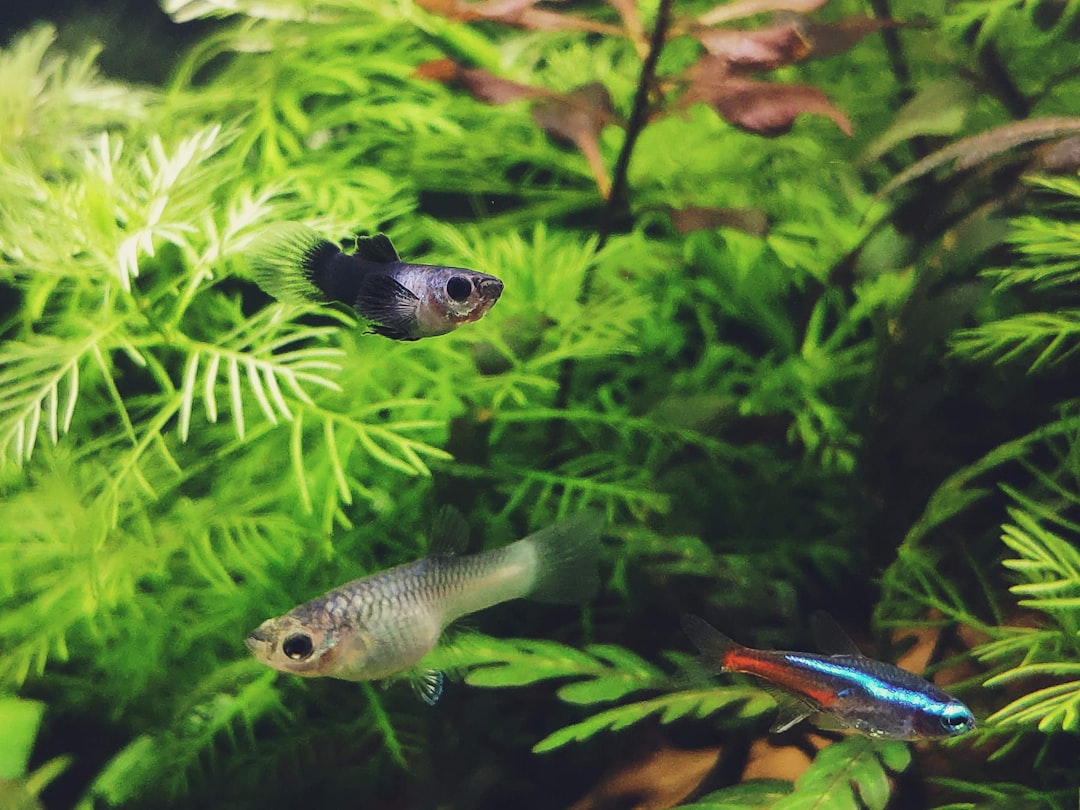
How to Cycle a New Tank with Feeder Guppies Instead of Bottled Ammonia
The LFS employee made it sound simple. “Just toss in a few feeder guppies. They’ll produce the ammonia, the bacteria will grow, and in a few weeks, you’re set.” What he didn’t say was that the process involves dead fish, cloudy water, and at least one moment when the ammonia test reads so high the person doing it considers draining the whole tank and starting over with a houseplant instead.
The method works. It’s also rougher than most online guides admit. Here’s what that actually looks like, mistakes included.
Why someone reaches for guppies at all. Bottled ammonia costs $8 to $12 for a small bottle and requires a graduated dropper, a calculator, and a willingness to measure things precisely. Feeder guppies cost about 50 cents each at most pet stores. For someone who already planned to keep fish eventually, the logic seems clean: let the future livestock generate the ammonia for the bacteria that will support them. The problem is that the logic assumes the fish will survive the process. Many don’t.
The initial setup. A 20-gallon tank, a sponge filter rated for 40 gallons, a heater set to 78°F, a cheap API master test kit that cost $35. No gravel yet — bare bottom makes it easier to siphon dead things out. Three feeder guppies, each maybe an inch long, bought from the “feeder” tank at the shop where three other dead ones already floated belly-up in the corner. That should have been the first warning.
Days 1 through 3: The quiet period. The water stays clear. The guppies swim around, looking exactly like any pet-store guppy. The person testing the water twice a day sees exactly zero ammonia. This is when doubt creeps in. Did the bacteria already grow? Is the bottle of test solution expired? The answer is neither. The tank just hasn’t produced enough waste yet. Three tiny fish in 20 gallons don’t generate much. The bacteria has nothing to eat.
Day 4: Overfeeding. Trying to accelerate the process, someone adds an extra pinch of flake food — maybe two pinches. The guppies eat some of it. The rest settles into the corners and under the heater. By the next morning, the water has a faint haze. The ammonia test finally shows something: 0.25 ppm. Progress.
Days 5 through 9: The spike. The uneaten food breaks down. The fish produce more waste. The ammonia climbs to 1.0 ppm, then 2.0. The guppies start looking stressed — clamped fins, hanging near the surface. This is where the person cycling the tank learns the difference between a written guide and a live situation. Online tutorials say “ammonia will spike and then drop as nitrite bacteria establish.” They don’t describe the specific feeling of watching a fish gasp while knowing it was put there deliberately.
One of the guppies dies on day 7. Another looks like it won’t make it through the night. The person does a 30% water change at 11 PM, using water that was sitting out for exactly four hours because nobody thought to prep more. The replacement water is 2°F cooler than the tank. The cloudiness gets worse.
The correction that should have been made on day 1. More fish, sooner. Three feeder guppies in a 20-gallon tank means a very slow cycle. A local breeder, when asked later, said the right number would have been six to eight, or one per three gallons, and that even that is conservative. “The feeder tank at the store has a hundred fish in a ten-gallon. They’re bred to survive high waste. Yours are swimming in a palace compared to what they came from.” The ammonia spike would have hit harder and faster, but it also would have ended sooner — and fewer fish would have suffered through a long, drawn-out climb.
Day 10: Nitrite appears. The ammonia drops to 0.5 ppm. The nitrite test turns purple immediately — somewhere above 2.0 ppm. The survivor guppy, still alive by some margin, now has a second toxin to contend with. The person running the tank learns that a fish-in cycle doesn’t just expose fish to ammonia. It exposes them to both ammonia and nitrite, stacked, for the duration of the bacterial transition. The timeline: ammonia-eating bacteria (Nitrosomonas) establish in roughly 7 to 14 days. Nitrite-eating bacteria (Nitrobacter, though the more accurate genus is Nitrospira) take another 10 to 14 days after that. That means two to three weeks of measurable toxins in the water.
The cost of the mistake. The two dead guppies are a loss of about a dollar. The real cost is the replacement water: $6 for dechlorinator, $12 for extra buckets because the original two weren’t enough, $35 for a Python water-changing siphon because the bucket method was taking too long and spilling on the carpet. The time cost: 45 minutes every other day doing water changes, testing, adjusting the heater because the replacement water kept dropping the temperature. The emotional cost: the specific regret of realizing that a $12 bottle of Dr. Tim’s ammonium chloride would have skipped the whole thing.
A better schedule for anyone still trying this method.
Start with six to eight feeder guppies in a tank of at least 15 gallons. Acclimate them slowly — float the bag for 20 minutes, add a cup of tank water every 5 minutes for another 15, then net them in. Don’t pour the bag water into the tank. Feeder tanks are notorious for carrying parasites and bacterial blooms.
Test ammonia and nitrite every 24 hours at the same time of day. Write the numbers down. Memory is unreliable, and the difference between 0.25 ppm and 0.50 ppm determines whether a water change is needed.
Do a 25% water change when ammonia exceeds 1.0 ppm. At 2.0 ppm, do a 50% change. At 3.0 ppm, do a 75% change and question the life choices that led to this moment. Add dechlorinator to the replacement water before it enters the tank — not after.
Feed the guppies a tiny pinch once a day, no more than they can eat in 60 seconds. Remove any uneaten food after that minute. The bacteria need ammonia, not rotting flakes.
The thing nobody mentions about water changes during cycling. Every water change removes some of the bacteria that have already colonized the filter media. The bacteria live primarily on surfaces — the sponge, the gravel, the glass — not in the water column itself. But the free-floating bacteria, the ones still searching for a surface to settle on, get dumped out with the old water. This slows the cycle. The trade-off is unavoidable: the fish need clean water to survive, and the bacteria need the fish to produce waste. The person running the tank ends up managing two competing needs for weeks, making constant small adjustments.
Day 16: The nitrite plateau. Ammonia reads 0 ppm consistently. Nitrite still reads 1.0 ppm. For three straight days, the nitrite number doesn’t move. The person starts researching whether feeder guppies can survive in nitrite-heavy water long-term. (They can’t. Nitrite binds to hemoglobin and prevents oxygen transport. Fish suffocate even in well-oxygenated water.) Another water change. Another dose of Prime, which temporarily binds nitrite into a less toxic form — but only for about 48 hours.
Day 21: The break. Nitrite finally drops below 0.25 ppm. Nitrate, the final product, registers at 5.0 ppm. The remaining feeder guppies — four of the original six — are still alive. Their colors have improved. They swim actively. The water is clear.
The full test checklist for confirming the cycle is complete.
A tank that has cycled will show 0 ppm ammonia, 0 ppm nitrite, and some measurable nitrate — typically between 5 and 20 ppm, depending on how much waste the fish produce and how many water changes were done during the process. Test all three for three consecutive days. If the numbers hold steady, the biological filter is established.
One more thing: don’t add new fish immediately. The bacterial colony has grown to match the waste output of six small guppies. Adding a dozen neon tetras or a single angelfish on day 22 will overwhelm the system. Add new fish slowly, one or two at a time, and test ammonia daily for a week after each addition.
What the feeder-guppy method actually costs vs. the bottled-ammonia method.
Feeder guppies: six fish at $0.50 each, $3 total. Extra dechlorinator for frequent water changes: $12. The Python siphon: $35, though this carries over to future tank maintenance. The two dead guppies: not a dollar cost, but a real one. Total out-of-pocket: about $50, plus the value of the time spent on water changes.
Bottled ammonia: $12 for Dr. Tim’s, enough for a dozen cycles. One bottle of Prime: $10. No extra equipment required beyond the basic test kit. No dead fish. Total out-of-pocket: about $22, and the cycle finishes faster because there’s no upper limit on how much ammonia can be added at once.
The bottled version is cheaper, faster, and doesn’t require anyone to watch a fish struggle. The only reason to use feeder guppies is if the bottled product genuinely isn’t available, or if the person intends to keep the guppies afterward and would have bought fish anyway. Treating them as disposable ammonia generators is the mistake that costs the most — not in money, but in the moment of holding a net under a dead fish at 11 PM while the nitrite test still reads purple.

📷 Photos: George Wong (Unsplash), Gabriele Proietti Mattia (Unsplash)