
The tanks by the register told a story the price tags didn’t
The tanks by the register told a story the price tags didn’t
The shop sits on a stretch of road where the businesses change every eighteen months or so — a vape shop becomes a coin laundry becomes a halal butcher — but this one has held its ground for fourteen years. A blue awning, faded to something close to grey. A bell that catches on the door frame during humid weather. Inside, the air smells like wet filter floss and the particular metallic note of thawing bloodworms.
For years, the tank closest to the register held Malaysian Trumpet Snails. A hundred or more of them, crawling over a slab of slate in a glass cube with no lid. The sign above it, handwritten on masking tape, said simply: “MTS — 3 for $2.” They were the kind of fish-keeping staple nobody thinks about until they suddenly can’t find them. A customer would come in for a single goldfish and walk out with a bag full of snails and a six-dollar plastic breeder box.
Then one Tuesday in late October, the snail tank was gone. In its place sat a black plastic quarantine tub with a sponge filter running so slow it barely broke the surface. The masking tape said “QUARANTINE — DO NOT TOUCH.” Inside: three small crayfish that nobody in the shop seemed to have ordered.
“I never thought about the water”
The owner, a man named Mr. Tan whose first language isn’t English but who learned to talk fish before he learned to write invoices, doesn’t mince words about why the snails disappeared. “The problem was never the snails,” he said one slow Wednesday afternoon, leaning on the counter in a way that suggested the conversation might take a while. “The problem was everybody else’s tanks.”
He explained it flatly, the way someone describes a leak they’ve been patching for months. Malaysian Trumpet Snails are almost always wild-caught in Southeast Asia, pulled from rice paddies and drainage ditches and canals that don’t bother with water quality reports. They arrive in mixed shipments — some to pet shops, some to aquaculture facilities, some to wholesalers who don’t even open the bags before reshipping them. The snails themselves are hardy enough to survive the journey. What they carry on their shells and in their digestive tracts is another matter.
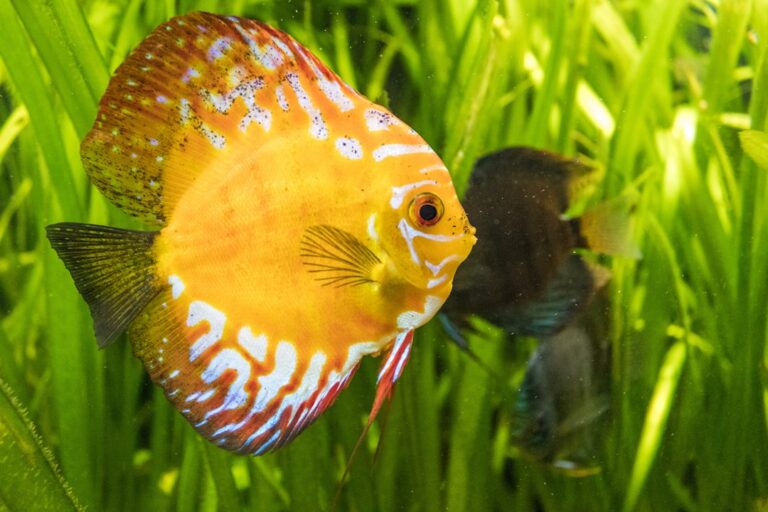
“I had a customer, regular guy, kept a 55-gallon planted discus tank for six years. Beautiful setup. He bought maybe fifteen snails from me in September. Two weeks later, his entire tank had planaria and some kind of hydra he’d never seen before. He lost three discus. Not from the hydra — from the stress of the treatments he used trying to kill the hydra.” Mr. Tan paused. “He told me to keep the snails.”
The shop didn’t have a formal quarantine protocol for invertebrates at that point. The snails arrived, spent a day in a holding bucket with an airstone, and went into the display tank. Most shops in the area operated the same way. Inverts were sold as “clean-up crew” — the assumption being that anything that eats algae and dead plant matter couldn’t possibly bring trouble into a tank. That assumption, Mr. Tan now believes, is wrong.
The bag water was a biological weapon
What arrived in those snail bags, according to a hobbyist who keeps a detailed spreadsheet of his own tank’s history, is a longer list than most people realize. “I started documenting everything I found in my tanks after a 2019 incident with some pond snails that wiped out my cherry shrimp colony,” said the hobbyist, who works nights at a warehouse and spends his mornings staring at aquarium glass with a magnifying lens. “The MTS were always the worst. Not because the snails themselves are bad — they’re great actually. But the stuff that comes glued to them is a roulette wheel.”
His spreadsheet, which he shared over email, lists the following hitchhikers imported via Malaysian Trumpet Snails over a three-year period: hydra in three colors, planaria of at least two species, limpets, seed shrimp, copepods (benign), a single dragonfly nymph that must have been an egg at the time of packing, and something he calls “the green slime” that he believes was an early-stage cyanobacteria bloom triggered by nutrients from dead snail tissue in the bag water.
“The stores don’t see it because they move the snails fast,” he said. “A bag comes in, they dump it into a tank with a lot of flow and a lot of turnover, the sick or stressed snails die overnight, the staff siphons them out in the morning, and the survivors look healthy enough. But the bag water — that water has been sitting in a dark plastic sack for 48 hours with fifty snails breathing and shitting in it. That water is a biological weapon.”
Mr. Tan, for his part, doesn’t disagree. “I never thought about the water. I thought about the snails. The snails look fine. The water just gets dumped.”
A 20-gallon long tank on a metal rack
The quarantine setup the shop now runs is not elaborate. It’s a 20-gallon long tank on a metal rack in the back storage room, next to a stack of empty cardboard boxes and a dehumidifier that runs constantly. The tank has a bare bottom, a single piece of PVC pipe for shelter, and a sponge filter that was never used anywhere else. The light runs for exactly six hours a day on a mechanical timer that ticks audibly in the quiet of the back room.
Every shipment of invertebrates — snails, shrimp, crayfish, even the occasional batch of freshwater clams that Mr. Tan orders on a whim — spends at least two weeks in this tank before anything moves to the sales floor. The first 48 hours are observation-only: no feeding, no water changes, just watching for die-off. If more than five percent of a shipment dies in that window, the entire batch gets held another week. If any unusual organisms appear on the glass or the PVC pipe, the batch gets treated with a commercial antiparasitic that Mr. Tan buys by the gallon from a distributor in Johor.
“The customers don’t see this part,” he said, gesturing at the tank from the doorway. “They see the snails in the cup, they pay, they leave. They don’t know they used to get a free sample of everything else.”
The quarantine process adds about two hours of labor per shipment — unpacking, acclimating, monitoring, cleaning. Mr. Tan estimates it costs him roughly forty dollars a month in electricity and a small amount of lost revenue from snails that die during observation. But he also estimates he’s lost exactly one customer since implementing the policy: the discus keeper, who never came back.
“One customer, or maybe ten? I don’t know. They don’t tell you when they leave. They just stop coming.” He shrugged. “But nobody’s blamed me for a tank crash since November. That’s worth something.”
The empty tank and what filled it
The display tank by the register is not empty. It now holds a small colony of Neocaridina shrimp, red cherries, that Mr. Tan breeds himself in a 40-gallon tank behind the counter. He started the colony from a single batch of five pregnant females purchased from a hobbyist three towns over — a source he trusts because he’s seen the tank in person and because the hobbyist, a retired electrician, keeps his own stock under conditions that would make a breeding facility jealous.
The shrimp are triple the price the snails were — $6 each, no discounts for bulk — and they sell slower. But nobody has come back with a complaint about hydra. Nobody has sent an angry email about planaria. The most common complaint now is that the shrimp are too expensive, which Mr. Tan considers a much better problem to have.
“The snails will come back eventually,” he said. “I’m working with a supplier in Penang who says he can do a pre-quarantine on his end. Three weeks in a bare tank, then ship. But the price goes up, and I don’t know if people will pay it.” He looked at the quarantine tank in the back room — still holding the three crayfish, which had molted twice since arriving and looked substantially larger than they had a month ago. “If they won’t pay it, then no snails. It’s not complicated.”
The crayfish, he added, are not for sale. They’re being held as a test case — a shipment he’s deliberately keeping in quarantine longer than necessary to see if anything unexpected emerges. So far, nothing has. But he’s not ready to move them to the sales floor yet. Maybe next month.
SNAIL RETURN — a bin under the sink
The shop has changed in less visible ways too. The fish room now has a laminated sheet taped to the wall behind the sink, listing the quarantine protocol step by step. Mr. Tan typed it himself, in English and Mandarin, because the part-time staff rotates and he can’t assume everyone remembers the verbal briefing. The sheet includes a line that reads: “If you are not sure, do not put it in the tank. Put it in the quarantine tank. Wait. Ask.”
There is a small plastic bin under the sink labeled “SNAIL RETURN” — for customers who bring back snails they bought elsewhere and want to trade or surrender. Mr. Tan doesn’t advertise this policy. He doesn’t charge for it either. He just accepts the bag, thanks the customer, and brings the snails directly to the quarantine tank without opening the bag in the fish room. “I don’t know where those snails have been,” he said. “I don’t want to know. I just want them in the tank where I can see them before I decide.”
The bin has been used twice in four months. Both times, the surrendered snails came with small hydra clinging to the shells. Both times, Mr. Tan treated the quarantine tank, waited three weeks, and then euthanized the snails rather than risk moving them into the main system. He did not tell the customers. “What would I say? ‘Your snails are infected’? They tried. They brought them here. That’s the best they could do.”
On the counter by the register, next to the shrimp tank, sits a small plastic cup with a single Malaysian Trumpet Snail in it. Mr. Tan calls it his “control” — a survivor from the last shipment that he never put through quarantine, because he wanted to see how long it would live in a bare cup with nothing but an airstone and a weekly water change. The snail has been there for six months. It eats blanched spinach and the occasional algae wafer. It has not died, has not visibly sickened, has not produced any hitchhikers. Mr. Tan checks it every morning when he opens the shop.
“This one is fine,” he said. “But I don’t know which one is fine until I watch it. That’s the whole thing.”
📷 Photos: Mats Hagwall (Unsplash), Jet Stouten (Unsplash)