How to find a better aquarium air pump than anything sold online — without paying for shipping or brand markup
How to find a better aquarium air pump than anything sold online — without paying for shipping or brand markup
The air pump in question arrived in a plastic bag with no box, no warranty card, and a sticker that read only “Made in Japan” in tiny roman letters beneath a company name printed in kanji. It cost ¥1,280 — roughly USD $11 at the exchange rate that week. It is still running, three years later, through two cross-country moves and a power outage that fried a $180 German-brand unit in the same tank.
The branded import it replaced — a popular model sold on every aquarium forum as “reliable” and “quiet” — lasted eleven months before the diaphragm tore. Repair parts cost half the price of a new unit. The replacement was no better.
This is not a story about a lucky find in a back-alley shop. It is a story about how the Japanese domestic market for aquarium equipment works differently than the export market, and why the product you can buy in a local fish store in Tokyo is often not the same product sold under the same name overseas. The difference is not branding. It is not marketing. It is the product itself.
What was wrong with the import
The branded import was a dual-outlet model rated for tanks up to 120 centimeters. On paper, it met the specifications for a 90-centimeter planted tank with moderate bioload. In practice, it did two things poorly: it vibrated, and it stopped producing pressure after six months.
The vibration was not a minor hum. It transmitted through the glass of a rimless tank and into the floor below, audible from the next room. The manufacturer’s solution — rubber feet sold separately — reduced the noise by maybe thirty percent. The rest was structural. The pump’s internal design used a single unbalanced diaphragm that beat against a hard plastic housing. It was cheap to make and cheap to buy at $35, and it performed like it.
Nine hundred days of continuous use is not an unreasonable lifespan for a $35 air pump, especially one sold as an entry-level product. The frustration was not the failure. It was that the replacement — ordered the same model, same brand, from the same retailer — also failed, in the same way, at almost exactly the same interval.
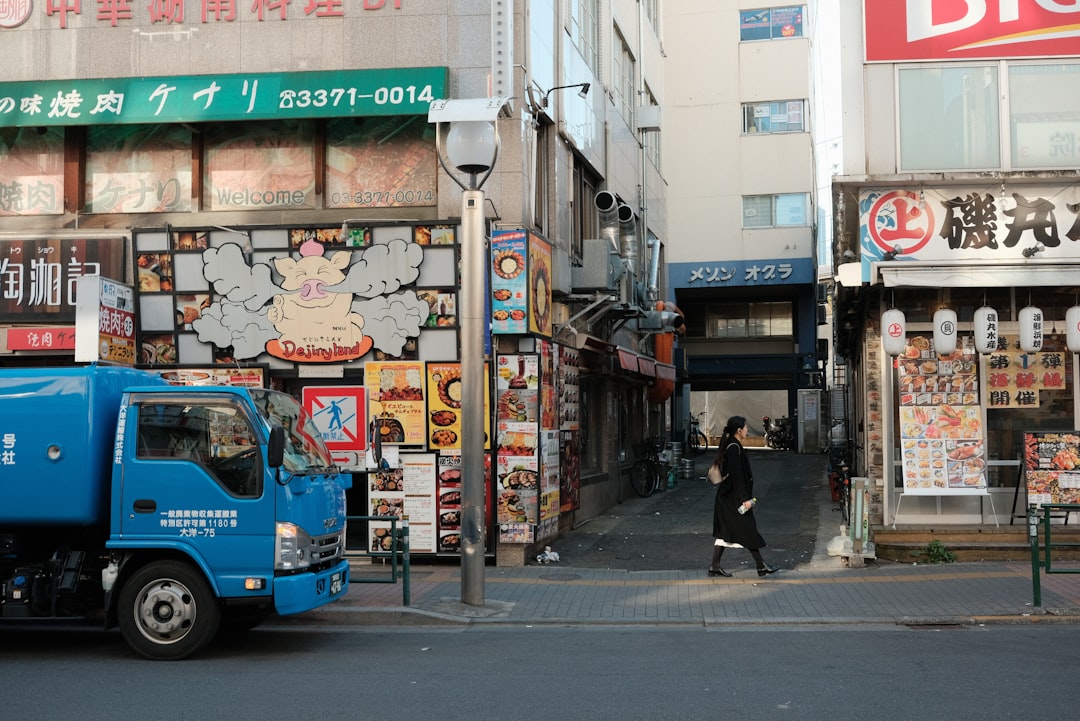
The second failure prompted a different approach. Instead of ordering another replacement online, the pump was taken to a local fish store near Shinjuku called Aqua Forest, a shop that specializes in planted tanks and has a reputation among Tokyo hobbyists as a place where staff actually know what they’re selling. The intention was to ask for a recommendation. What happened instead was a small lesson in how supply chains and product specifications diverge.
The green-stained hands behind the counter
The shop carried three brands of air pump: a German model that cost ¥9,000, a Chinese model that cost ¥600, and the Japanese model for ¥1,280. None of them were the brand that had failed twice. The staff member — a man in his forties with hands stained green from scraping algae off display tanks — was asked directly why he didn’t stock the popular online brand. He walked to a shelf, picked up the ¥1,280 unit, and tapped the housing with his fingernail.
“That material,” he said, in Japanese, “is not the same as what you buy outside Japan. Even if the logo is the same.”
He explained that Japanese aquarium-equipment manufacturers routinely run two production lines: a domestic line that meets higher quality standards — tighter tolerances, better plastics, more consistent diaphragm material — and an export line built to a price point for markets where the brand competes mainly on cost. The product name and packaging may be identical. The internal components are not.
This is not a conspiracy. It is a response to market conditions. The Japanese domestic market for air pumps is small, demanding, and intolerant of noise complaints in apartments with thin walls. The export market is global, price-sensitive, and competes against Chinese manufacturers who can ship a pump for $8. To hit the export price point, corners get cut. The pump that fails in eleven months is not a defective unit. It is the unit the manufacturer intended to sell at that price in that market.
The ¥1,280 pump at Aqua Forest was not an export model. It was the domestic model, sold in a domestic shop, to domestic customers who would return it the next day if it hummed.
The test setup on the counter
The branded import rated at 2.5 liters per minute at zero head height. The domestic Japanese pump rated at 1.8 liters per minute at the same measurement. On paper, the import was stronger. In practice, the import’s output dropped to barely a trickle through a single airstone at 60 centimeters of head, while the Japanese pump pushed two airstones at the same depth without visible loss of bubble density.
The discrepancy is not in the rating. Export-market pumps often measure airflow at the outlet with no resistance, no tubing, no back pressure. The number is technically accurate for a pump sitting on a bench with nothing attached. The domestic Japanese pump’s rating accounts for the standard losses of typical aquarium use: 50 centimeters of silicone tubing, one airstone, a check valve. The number is lower. The real-world performance is higher.
The staff member at Aqua Forest demonstrated this by plugging both pumps into a small test setup at the counter — a plastic tub, two identical airstones, two lengths of tubing cut to the same length. The import’s airstone produced visible bubbles, but the column was uneven, with gaps at the edges. The domestic pump’s airstone produced a steady, uniform curtain of fine bubbles from edge to edge. The difference was not dramatic to a casual glance. To someone who has watched an airstone struggle for months, it was immediately obvious.
Eight units on a shelf
Aqua Forest is a specific kind of shop. It is not a chain. It is not particularly large. It occupies a narrow storefront on a side street off a main road, with a sign in Japanese and English and a display window that changes every few weeks. Inside, the tanks are arranged in rows with the precision of a gallery. The staff do not upsell. They do not push brands. They answer questions with the patience of people who have answered the same question hundreds of times and expect to answer it hundreds more.
The air pump shelf held exactly eight units — three of the German model, two of the Chinese model, three of the Japanese model. No barcode-scanners, no inventory-management screen visible to customers. The staff member simply knew what was in stock and where it was.
This is the kind of shop that cannot exist in a market where every purchase decision is mediated by search results and star ratings. The shop survives because it offers something an online listing cannot: the ability to see, touch, and test a product before buying it. A customer who buys the ¥1,280 pump and finds it noisy can bring it back the next day. The shop will test it, confirm the defect, and exchange it. The staff member has the authority to make that call without a manager’s approval.
The online import, by contrast, came from a warehouse in a different prefecture, shipped by a logistics company that charges more for returns than the product costs. When the first pump failed, the cost of returning it was ¥850 — more than half its purchase price. The second one went in the trash.
Searching past the first page of results
Not everyone can visit a specific fish store in Tokyo. Most people reading this will never set foot in Aqua Forest. The principle, however, travels.
Japanese domestic aquarium equipment is not a secret. It is not hidden. It is simply not the first thing that appears in search results, because the suppliers do not spend heavily on international advertising and the products are not aggressively priced to compete on global marketplaces. To find it, a buyer needs to look past the first page of results and search using different terms: the Japanese brand name written in romaji, a specific model number, the phrase “JDM” (Japanese domestic market) appended to the search.
Some of the brands worth checking:
– **Suisaku** — makes air pumps and filters that are inexpensive, quiet, and built with the same dual-line production as the pump described here. The domestic models are not always labeled differently. The model number often includes an extra digit.
– **GEX** — a major Japanese aquarium brand that manufactures in China but maintains separate quality specifications for domestic and export products. The difference is usually in the diaphragm material and the motor housing.
– **Marukan** — primarily known for small tanks and accessories, but their air pumps are widely available in Japanese pet stores and rarely seen outside Asia. The design philosophy is the same: quiet operation prioritized over maximum airflow.
– **Nisso** — produces some of the smallest quiet air pumps available, designed for nano tanks and shrimp setups. The export versions exist but are hard to find because the margins are too thin for most international distributors to bother.
The catch is that these products are not always available through standard international retailers. Some are. Many are not. The reliable way to get them is through a proxy buying service — a company that purchases items from Japanese domestic websites and forwards them internationally. The cost of the proxy service, plus shipping, often still comes in below the price of a comparable branded import, especially for mid-range and high-end equipment.
The ¥11 pump versus the $35 import
The ¥1,280 pump cost $11 at the time of purchase. Shipping it to an address outside Japan through a proxy service would add roughly ¥1,500 to ¥2,000 for a single small item, bringing the total to about $25 to $30. That is still less than the $35 import that failed twice, and the domestic pump is expected to outlast it by a factor of three or more.
The German model at Aqua Forest, priced at ¥9,000 (about $80 at the time), was clearly a better piece of engineering than any of the others. But for the application — a 90-centimeter planted tank with moderate aeration needs — the Japanese pump was overkill. The $80 pump would last a decade. The $11 pump would last three to five years. The import would fail in one.
The choice was not between the best and the cheapest. It was between the product designed for the market and the product designed for the price.
Three things that would have saved the first two pumps
Given the same situation again, the first thing to change would be the assumption that a product sold under a familiar brand name in an international marketplace is the same product sold under that brand name in its home market. It is often not. The brand name is a logo. The product is the sum of its internal specifications, and those specifications are adjusted for the market.
The second thing: never buy an air pump from a retailer that does not allow returns for noise. Air pumps are mechanical devices. They vibrate. They hum. Some hums are acceptable. Some are not. A buyer cannot tell from a product listing whether a given unit will hum at a frequency that drives them insane five nights in a row. The only way to know is to hear it, or to buy from a shop that will take it back if the noise is wrong.
The third thing: check the diaphragm material before buying. The import model used a rubber compound that stiffened and cracked within a year. The domestic pump used a silicone-based diaphragm that remained flexible after three years of continuous use. This information is rarely listed on the product page. It is sometimes listed in the Japanese-language manual that does not accompany the export version. The only reliable way to know is to ask someone who has opened both units.
4.8 stars and four thousand reviews
Aqua Forest is not the only shop like this. Similar stores exist in Osaka, Nagoya, Fukuoka, and in smaller cities across Japan. The staff at these shops have seen pump failures, filter failures, and heater failures from every brand sold in the country. They know which products get returned and which products do not. They know which manufacturers changed their diaphragm supplier in 2019 and whose motor bearings are now made in Vietnam instead of Thailand.
The online import that failed twice was bought from a seller with a 4.8-star rating and four thousand reviews. The reviews were genuine. The product was genuine. The seller was not dishonest. The problem was not a bad seller. The problem was that the product was built to a different standard than the one the buyer assumed they were getting. The reviews were from people using the same product in different conditions — different tank sizes, different aeration needs, different tolerance for noise and vibration. The product was adequate for many of them. It was not adequate for the specific use case at hand.
The staff member at Aqua Forest did not say any of this directly. He simply handed over the ¥1,280 pump, accepted the cash, and wrote the warranty period — three years — on the back of a receipt in marker. The receipt is still in a drawer. The pump is still running.
📷 Photos: Dominic Kurniawan Suryaputra (Unsplash)