The Guppy Fry in the Corner Tank Were Fine Until They Weren’t
The Guppy Fry in the Corner Tank Were Fine Until They Weren’t
The first sign wasn’t a fish rubbing against anything. It wasn’t clamped fins or gasping at the surface. It was a single fry, maybe three weeks old, holding itself at an odd angle near the heater — not sick exactly, but not right either. By the time the white specks appeared on its tail three days later, the tank had already been running for two months without a single new addition. No new fish. No new plants. No shared equipment between tanks. The usual suspects had alibis.
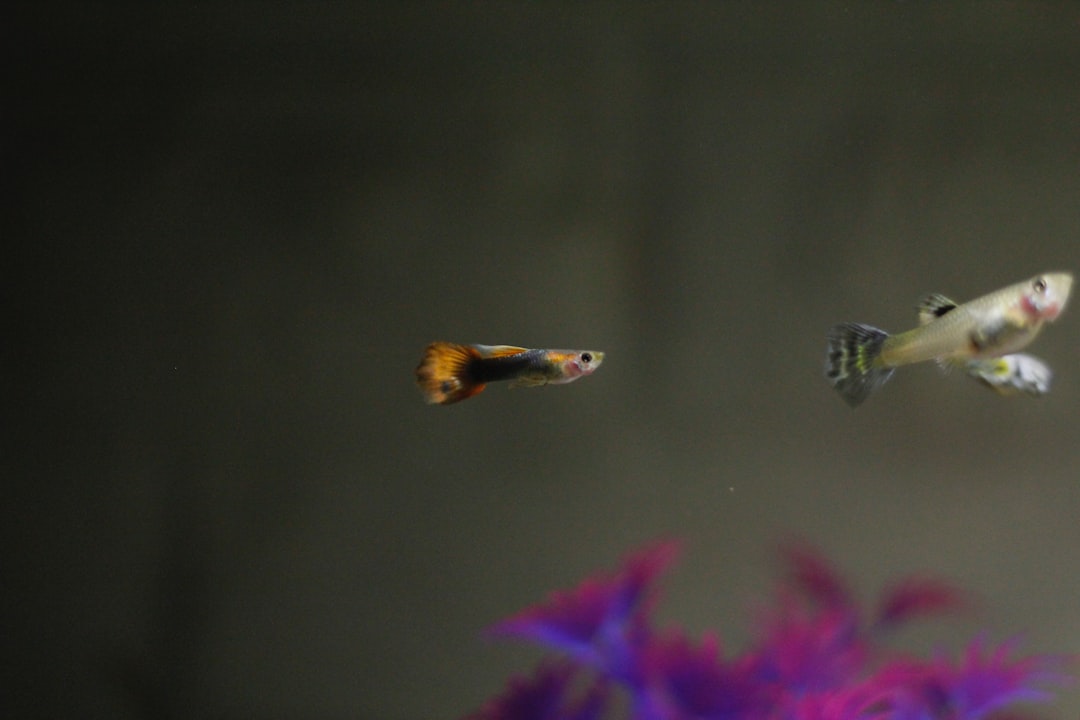
Whitespot, or ich, is supposed to arrive with something. A bag of fish from the shop. A scoop of water from a friend’s tank. A net that wasn’t dried between uses. But this was a closed system — a 40-liter breeder tank with twelve juvenile guppies, a sponge filter, and a handful of floating hornwort. The fry had been born in that tank, to parents that had been in the same system for six months without a spot between them. The standard explanation didn’t fit.
The owner of the setup — let’s call him Marcus, a hobbyist in the northern suburbs who keeps a small fish room in a converted laundry — had seen ich before. He’d treated it with heat, salt, and the occasional course of a commercial remedy. But this was different. The spots appeared slowly, one or two per fish at first, then a scattering. The fish kept eating. They didn’t flash or scratch. They just looked progressively worse over ten days, and nothing he tried stopped the gradual spread.
“I spent the first week assuming I’d missed something,” Marcus said later. “A net that touched another tank. A splash of water on my hand. But there wasn’t a moment where I could point and say, that’s when it happened.”
An Infection That Moves Like a Cold Draught
The life cycle of Ichthyophthirius multifiliis is well documented, but the conditions that trigger an outbreak in a stable tank are not as simple as most guides suggest. The parasite is almost always present in low numbers in a mature aquarium — established hobbyists have known this for decades, even if the beginner literature tends to present it as an invader that must be introduced. A healthy fish’s immune system and mucus layer keep the tomites from attaching. The trouble starts when something changes that balance.
In Marcus’s case, the suspects were temperature, nutrition, and an invisible shift in the fry’s immune tolerance. The tank sat at 24°C, a steady reading from a glass thermometer that had never wavered. But a digital probe revealed a different story: the heater was cycling between 23°C and 26°C in a slow, six-hour oscillation, and the water near the outflow was consistently half a degree cooler than the intake side. The fry, being fry, spent most of their time in the flow of the sponge filter’s current, where the temperature was at its most variable.
That kind of fluctuation — not dramatic, but persistent — is exactly the kind of stress that doesn’t look like stress. No gasping, no red gills, no clamped fins. Just a slow erosion of the fish’s ability to keep the parasite population in check.
The Thermometer That Lied
The glass thermometer was off by 1.2°C at the low end of the cycle. It had been purchased from a chain pet store for $4.50, and it had worked fine for six months. But Marcus had placed it on the far left side of the tank, opposite the heater, and it had never registered the swing because the water there mixed slowly. The heater itself was a reputable brand — an Eheim Jäger, 50 watts — but it was undersized for the room’s ambient temperature. In a heated house, it would have held steady. In an uninsulated laundry room that dropped to 16°C overnight, the heater cycled constantly.
“I replaced the heater with a 100-watt unit and saw the temperature stabilize within hours,” Marcus said. “But the ich was already visible by then. The damage was done.”
The mistake wasn’t dramatic. It wasn’t a power outage or a forgotten water change. It was a cheap thermometer that read a comfortable 24°C while the actual water temperature drifted through a range large enough to weaken a juvenile fish’s immune response over weeks. The fry had been swimming in a tank that was never truly the same temperature twice.
What Actually Worked, and What Didn’t
Marcus tried the standard heat-and-salt protocol first. Raise the temperature to 30°C over 24 hours. Add aquarium salt at 1 tablespoon per 5 gallons. Wait three days. The fry survived the temperature ramp, which surprised him — guppy fry are hardy, but a 6°C shift in a day is aggressive for any fish. The spots, however, did not disappear. They stopped spreading for about four days, then returned on the same individuals.
This is the point where most published advice assumes the hobbiest made a mistake. The salt wasn’t measured correctly. The temperature wasn’t held long enough. But Marcus had a background in biochemistry and had been keeping fish for fifteen years. The protocol was executed correctly. It simply didn’t work.
The commercial treatments were next. A bottle of a formalin-malachite green product, dosed exactly per the label. Then a second course after a water change. The spots faded slightly, but never fully cleared. The fish continued eating. The parasite continued its slow, frustrating persistence. Marcus estimated he spent around $45 on treatments that did not resolve the issue, plus two weeks of elevated electricity costs from keeping the tank at 30°C in a cold room.
The breakthrough came from an unexpected direction: a forum post from 2018, buried in a thread about stubborn ich in fry tanks. The author had suggested that the standard treatment assumes the parasite’s entire life cycle is exposed to the medication, but in a tank with heavy plant cover — Marcus had hornwort filling about a third of the volume — some tomites were settling on the plant surfaces rather than the glass or substrate, and the medication concentration at those points was lower due to absorption by organic material.
He removed the hornwort entirely. The fish were visibly stressed for two days, losing their preferred cover. But the tank became easier to treat. A single course of the same formalin-malachite green product, at the same dose, cleared the ich within five days.
The Cost of Hornwort
It’s a detail that only makes sense after the fact. Hornwort is a dense, fast-growing plant with fine needles that trap debris and provide immense surface area for microscopic life. It also traps medication, absorbs it, or otherwise reduces its bioavailability in ways that don’t show up in the product’s instructions. The plant itself was fine — no die-off, no discoloration. It just acted as a chemical sponge, keeping the local concentration of the treatment too low to kill the parasite in its free-swimming stage.
The hornwort had been in the tank since the fry were born. Marcus had never considered it a variable worth controlling. The fish had bred in it, hidden in it, and grazed on the biofilm it grew. But it was also, in retrospect, the reason the parasite survived multiple treatments.
What the Science Says, and What It Doesn’t
Research on ich treatment in planted tanks is thin. Most studies on the efficacy of malachite green and formalin were conducted in bare-bottom aquaria or laboratory systems where plants were not a factor. The product labels do not mention plant interference because the data to support such a warning does not exist. Hobbyists have reported the phenomenon for years — threads on forums, notes in club newsletters — but it has never been formally investigated.
“The interesting thing is how long it took to figure out,” Marcus said. “I had a perfectly logical explanation for everything except the plants. I checked the temperature. I checked the dose. I checked the water parameters. The hornwort was just there. It didn’t look like a problem.”
He now runs a separate treatment tank with no plants when dealing with ich in any fish under three months old. The fry recover faster in a bare system, even with the added stress of being moved. The plants stay in the main tank, and the treatment happens in a plastic storage bin with a heater and airstone. It’s not elegant, but it works.
The Fry That Survived
The ich outbreak that started this whole chain of events lasted 23 days from first spot to full clearance. The fry that survived — nine out of twelve — grew into healthy adults with no visible scarring or recurring infections. The three that died were among the smallest, and their deaths came not from the parasite itself but from the cumulative stress of temperature shifts, medication, and the removal of their cover.
Marcus transferred the remaining hornwort to a separate tank after a two-week dry-out period. He doesn’t know whether the parasite survived on the plant surfaces during the treatment or whether the hornwort simply diluted the medication below effective levels. Either way, he doesn’t reuse plant material from an outbreak tank without drying it first.
The tank itself is still running, now with a new generation of fry from the same bloodline. The heater is a 100-watt unit with a digital controller. The thermometer is a set of three — one at each end and one in the middle — and they all read within 0.3°C of each other. Marcus checks them weekly, which is more than he used to.
The slow-bloom ich, the one that arrived without a visitor, turned out to have a perfectly mundane explanation. A cold room. An undersized heater. A cheap thermometer. A dense plant that nobody thought to question. None of it was exotic. All of it was invisible until someone looked at the whole system instead of just the fish.
📷 Photos: Ethan Nyatsine (Unsplash)