
At the Corner of the Living Room, Pink Gravel and a Silicone Blob
The tank sat in the corner of the living room for three weeks before any water touched it. That was the first mistake — buying the aquarium on impulse at a weekend market in Chatuchak, hauling it back on a songthaew with the seatbelt barely reaching around the glass, and then leaving it empty while figuring out everything else in the wrong order. A sixty-centimeter tank, Thai-made, the silicone beads uneven along one corner. Fifteen hundred baht, including a plastic bag of pink gravel that looked like something from a dollhouse diorama. You always stay longer than you planned.
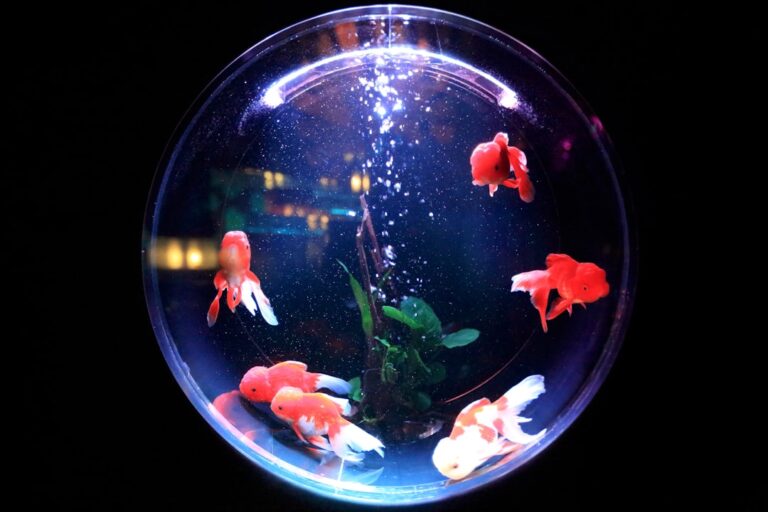
The fish themselves came two days after the water. Two goldfish, a common and a comet, purchased from a stall near the Bangkok riverside where the vendor netted them from a concrete holding tank the color of weak tea. A hundred and twenty baht for the pair. The vendor said nothing about quarantine, nothing about cycling the tank, nothing about the size they would reach. Just handed over the plastic bag, twisted at the top with a rubber band, and turned to the next customer.
Within a week, one fish was dead and the other was swimming in tight circles near the surface, fins clamped against its body. What followed was a crash course in everything the vendor should have mentioned — and the kind of learning that costs money, sleep, and a certain amount of dignity when explaining to a landlord why there is a bucket of green water in the bathroom.
The Nitrogen Cycle Does Not Negotiate
A new tank needs four to six weeks to develop enough beneficial bacteria to process fish waste into less toxic compounds. During that period, ammonia and nitrite levels spike, and fish that are added too early essentially live in their own poison. The goldfish died because nobody told the buyer about this. A simple liquid test kit — around 600 to 800 baht from a proper aquarium shop — would have shown the ammonia reading climbing past 2 ppm within days of adding fish. Without that test, the only sign was the fish behaving oddly, and by then the damage was done. The correct sequence is: set up the tank, add a source of ammonia (fish food or pure ammonium chloride), test weekly, wait for nitrite to appear and then fall to zero, wait for nitrate to appear, and only then add the first fish. A bottle of ready-made bacteria speeds this up by perhaps a week but does not eliminate the waiting.
A Bare-Bottomed Ten-Liter Tank in the Bathroom
The second batch of fish — five neon tetras from a different vendor, bought after the goldfish died and the tank had been stripped and restarted — carried parasites that killed three of them within ten days. A separate ten-liter tank with a sponge filter and a lid costs about 400 baht. Running it for two weeks with new fish before adding them to the main tank would have saved the tetras and prevented the medication costs that followed — three different treatments from the aquarium shop, each around 250 baht, applied in sequence because the symptoms were misidentified. The quarantine tank does not need to be pretty. It needs filtration, a heater if the fish are tropical, and no gravel — bare-bottomed, so waste is visible and removable. The fish stay there for a minimum of fourteen days. No exceptions for healthy-looking specimens. Fish can carry diseases with no visible symptoms for weeks.
The Common Goldfish That Wouldn’t Fit
The common goldfish from the riverside stall would have outgrown the sixty-centimeter tank within a year. Adult commons reach thirty centimeters or more and produce waste proportionate to their size. No filter rated for a tank that small can keep up. The comet goldfish, also from that stall, needed cooler water than the tetras that came later — goldfish are coldwater fish, while neons are tropical, requiring a heater set to 24 to 26 degrees Celsius. Mixing them would have meant one species always living in the wrong temperature. Research beforehand, rather than buying based on what looked pretty in the vendor’s tank, would have revealed that a sixty-centimeter tank realistically suits small fish — rasboras, certain tetras, dwarf shrimp — not the big, messy species that beginners often reach for first.
A Canister Filter from Sukhumvit
The filter that came with the Chatuchak tank was a hang-on-back model rated for tanks up to forty liters. The actual water volume, after accounting for gravel and decor, was closer to 50 liters. An undersized filter means the water never fully clears, ammonia builds up faster than the bacteria can process it, and the fish live in a constant state of stress. Replacing it with a canister filter from a shop on Sukhumvit — sixteen hundred baht, rated for a hundred liters — transformed the water quality in three days. The rule that experienced keepers repeat, and that beginners tend to ignore until they see the difference for themselves: the filter should turn over the tank’s full volume at least four times per hour. For a 50-liter tank, that means a filter rated for at least 200 liters per hour. Most filters sold as “complete kit” inclusions are rated for less.
A Sample of Water Finally Asked For
Between the goldfish deaths and the tetra parasite outbreak, the water was tested exactly once — after the second batch of fish started dying, when someone at the aquarium shop finally asked for a sample. The results: ammonia 0.5 ppm, nitrite 1.0 ppm, pH 6.2. The low pH was probably a result of the gravel leaching minerals, and the nitrite indicated the cycle had not fully established despite the waiting period. Testing weekly during the cycling phase, and then every two weeks after stocking, would have caught both problems before they killed fish. A liquid test kit covers ammonia, nitrite, nitrate, and pH, and lasts for months. Strips are faster but less accurate and more expensive per test over time. The initial cost of the liquid kit — around 800 baht for a master test kit — is less than the cost of replacing two batches of fish and buying the medications that did not solve the problem anyway.
The tank that finally stabilized held eleven neon tetras, six dwarf rasboras, and a single Amano shrimp that outlived everything else. The water stayed clear. The fish stopped dying. The filter ran quietly. What made the difference was not any single purchase or piece of advice, but the order in which things happened — cycle first, then quarantine, then stocking slowly, with testing as the routine that tied it all together. The vendor at the river market had none of this information and sold the goldfish anyway. The shop on Sukhumvit had test kits and filter ratings and quarantine advice, but only to those who asked the right questions.
The tank sits on the same corner now, the pink gravel replaced with a dark substrate that does not look like a child’s craft project. The silicone bead along one corner still catches the eye. The filter hums. The fish are small and boring by most standards, and they are still alive. That counts for more than it sounds like it should.

📷 Photos: Brett Jordan (Unsplash), Miguel A Amutio (Unsplash)