A Loupe and a Lettuce Leaf
The question arrives in dozens of DMs, forum posts, and shop counter conversations every week: “How do I actually start breeding?” Not the theory. Not the tank cycling lecture. The real, boots-on-the-ground, where-do-I-put-my-hands-on-Day-One logistics. A breeder who’s been at it for a decade, one who maintains a small room of forty tanks in a basement in Johor, sums it up bluntly: “Most people either overplan for months and never start, or they throw fish in a tank and hope. Neither works.” There is a middle path. It takes three days.
This itinerary assumes a single breeding pair or a small harem, a species the keeper has already kept successfully for at least six months, and a bare minimum of equipment: one 10- to 20-gallon tank, a sponge filter, a heater, some spawning medium (mops, slate, or broad-leaf plants depending on the fish), and about RM 200 (roughly USD 45) set aside for unexpected purchases. The timeframe is deliberate. Anything longer and the planning becomes procrastination. Anything shorter and the chances of a crash go up.
Day One: The Squeezed Sponge
The first morning is not about the fish. It’s about the water. A breeder in Penang who keeps wild-type Betta imbellis describes the most common failure he sees: “People put the pair together on Day One. The water’s not ready, the stress is high, and they get aggression or fungus before anything spawns.” The correct move is to fill the breeding tank, install the sponge filter from an established tank (not a new one — squeeze the gunk from an existing filter into the water), and let it run for 24 hours. No fish. Just water, heat, and patience.
This is also the day to make the hard call on the pair. The female should be visibly full of eggs — a rounded belly, not just a fat fish from overfeeding. The male should be in full colour, building a bubblenest if the species is an anabantoid, or showing clear territorial behaviour if it’s a substrate spawner. If either fish looks off — clamped fins, faded colour, unusual hiding — the breeder should delay the entire project by a week. A rushed pairing produces nothing but dead eggs and a frustrated keeper.
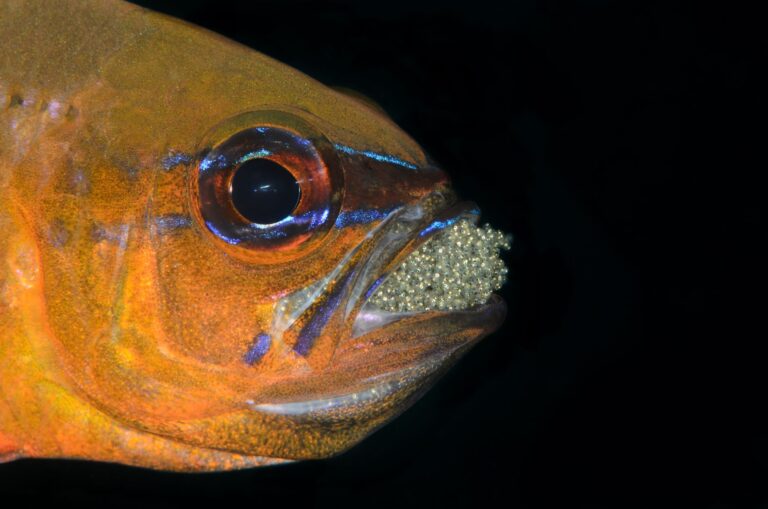
The afternoon is for equipment shopping. The Johor breeder insists on one specific purchase: a magnifying glass or a cheap jeweller’s loupe. “You need to see the eggs. Not guess. See them. The difference between a fertile egg and a fungus ball is about two millimetres and one day.” A loupe costs RM 15 at any hardware shop. It’s the single most underrated tool in breeding.
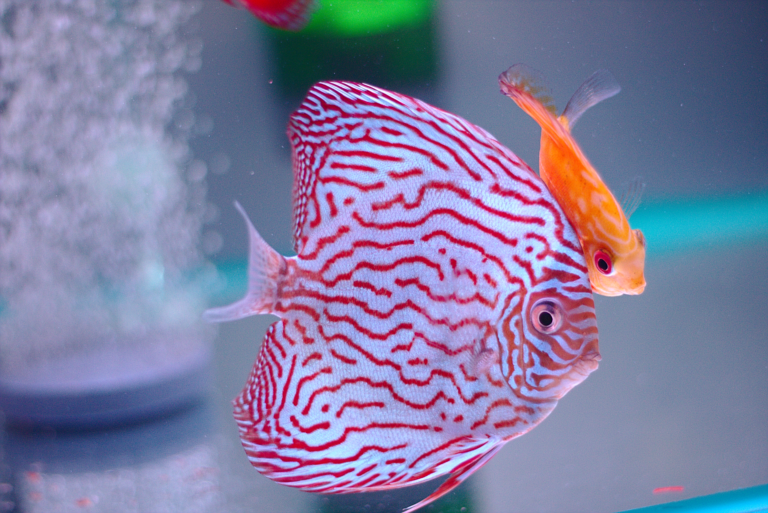
By evening, the tank should be at the target temperature — 26–28°C for most tropical species, slightly warmer for discus or rams. The sponge filter should be bubbling gently, not blasting. The light should be off. Stress reduction starts now.
One more thing: the breeder should write down the exact time the filter went in, the temperature, and the source of the water (tap with conditioner, RO, or aged). The notes seem pointless on Day One. They are invaluable on Day Three when something goes wrong and the only way to troubleshoot is to look back at what changed.
Midday, Not Dawn
Morning comes, and the water is ready — clear, stable, at temperature. The breeder should test ammonia and nitrite before anything else. If either reads above zero, wait six more hours and test again. If they’re still elevated, the filter squeeze didn’t take. The solution is a 50% water change with aged water from the main tank, not new water, and another 12 hours of waiting.
Assuming the water tests clean, the introduction happens at midday. Not dawn, not dusk — midday, when both fish are alert but not at peak territorial aggression. The female goes in first, in a clear plastic cup or a breeder box floating inside the tank, for 30 minutes. This lets her acclimate to the water chemistry and the male acclimate to her presence without physical contact. After half an hour, she’s released. The first five minutes are critical: the male will circle, flare, and possibly chase. If the chasing turns into sustained biting — more than three or four nips in a row — separate them and try again in the afternoon. Most pairs that are genuinely ready will settle into a dance within ten minutes, not a fight.
The rest of Day Two is observation. The breeder should check every two hours for spawning activity: the male wrapping his body around the female, the pair shimmying near the spawning site, or the telltale scattering of eggs. Some species spawn at dusk. Some spawn at dawn. Some, like many tetras, scatter eggs in a burst and eat them immediately if not removed. The breeder needs to know which type they are working with — not from memory, but from the species profile they should have printed and taped to the tank stand.
A breeder in KL who works with Apistogramma cacatuoides describes a common mistake: “People see the female getting plump and think it’s happening. She might hold those eggs for a week. The male might not be ready. The water chemistry might be slightly off. You don’t chase the spawn — you let it happen. Pushing a pair that isn’t ready will make them not spawn for two months.”
By late evening, if nothing has happened, the breeder should do a small cool water change — drop the temperature by about 2°C with a 20% change, using slightly cooler-than-tank water. The temperature drop mimics rain and often triggers spawning in species evolved to breed during wet seasons. It doesn’t always work. But it works often enough that it’s the first trick any experienced breeder reaches for.
The breeder should also prepare the fry food now, not later. A culture of infusoria — basically a jar of aged water with a lettuce leaf or a pinch of yeast — takes a few days to light up. Starting it on Day Two means it will be ready when the fry hatch on Day Four or Five. A backup option: powdered fry food (about RM 25 for a small container) or newly hatched brine shrimp eggs, which need to be ordered in advance and take 24 hours to hatch. The breeder who hasn’t planned the first meal has already lost the first batch of fry to starvation.
Day Three: The Light Off
By morning of Day Three, one of three things has happened. The pair has spawned. The pair has not spawned but is showing clear interest. Or the pair has been fighting and needs to be separated.
If the spawn happened, the breeder’s job shifts from encourager to guardian. The eggs may be visible — tiny translucent spheres scattered across the spawning mop, the glass, or the underside of a leaf. The parents may guard them (many cichlids) or ignore them completely (most egg-scatterers). The breeder needs to decide whether to remove the parents or leave them. For substrate spawners that guard the eggs, leaving the parents in place is usually correct. For scatterers, the parents will eat the eggs within hours. Remove them immediately. A nylon spawning mop can be lifted out and transferred to a separate hatching tank — eggs and all — without damaging the eggs.
If the pair hasn’t spawned but is circling and displaying, the breeder should leave them together for one more day. The Johor breeder describes this as “the watch-and-see window. Some pairs take 48 hours to relax into the tank. If you separate them on Day Three because nothing happened, you might have pulled them apart just as they were about to go.” The decision to separate should be based on aggression, not impatience.
If there’s been active fighting — torn fins, scales on the substrate, one fish cornered and gasping — separate them immediately and quarantine both. The female, in particular, can take damage that doesn’t show for days. A separated female that looks fine but stops eating is a sign of internal injury or stress. The breeding project is over for this cycle. The breeder should wait at least two weeks before trying again with a different pair or a different approach.
One more detail that only matters on Day Three: the light. Many breeders keep the tank completely dark for the first 24 hours after a spawn. Light stresses the eggs and encourages fungus growth. A covered tank, no room light, no flash photography — nothing. The breeder should check the eggs only with a dim torch or a phone screen on the lowest brightness, and only once every six hours.
The Penang breeder who works with wild bettas mentions a small ritual: “When I see the first wigglers — the fry that have just hatched and are hanging on the glass or the nest — I turn the light on for exactly two minutes. Just to see them. Then off again for another 24 hours.” It is not necessary. It is the part that makes it worth doing.
The Wigglers
The three-day window closes. The eggs have hatched or they haven’t. The fry are swimming or they aren’t. The breeder now has either a tank full of hope or a clean tank waiting for the next attempt. Either outcome is a result.
The fry will need infusoria or liquid fry food for the first week, then microworms or baby brine shrimp, then crushed flake. A grow-out tank that has been cycling for the entire three days will be ready just in time. The water changes go from biweekly to daily — small ones, 10% to 20%, with water matched exactly to temperature and pH. The filtration gets upgraded. The feeding schedule becomes a second job.
But that is a different three-day itinerary. For now, the breeder has crossed the line from someone who thinks about breeding to someone who has done it. The first spawn might not survive. The second might not either. The third will. And the loupe sitting on the shelf, the jar of infusoria bubbling on the counter, and the notes taped to the tank stand will still be there, ready for the next attempt.

📷 Photos: Brett Jordan (Unsplash), Brett Jordan (Unsplash)