
Six Days of Quarantine and the New Corydoras Still Won’t Eat
Six Days of Quarantine and the New Corydoras Still Won’t Eat
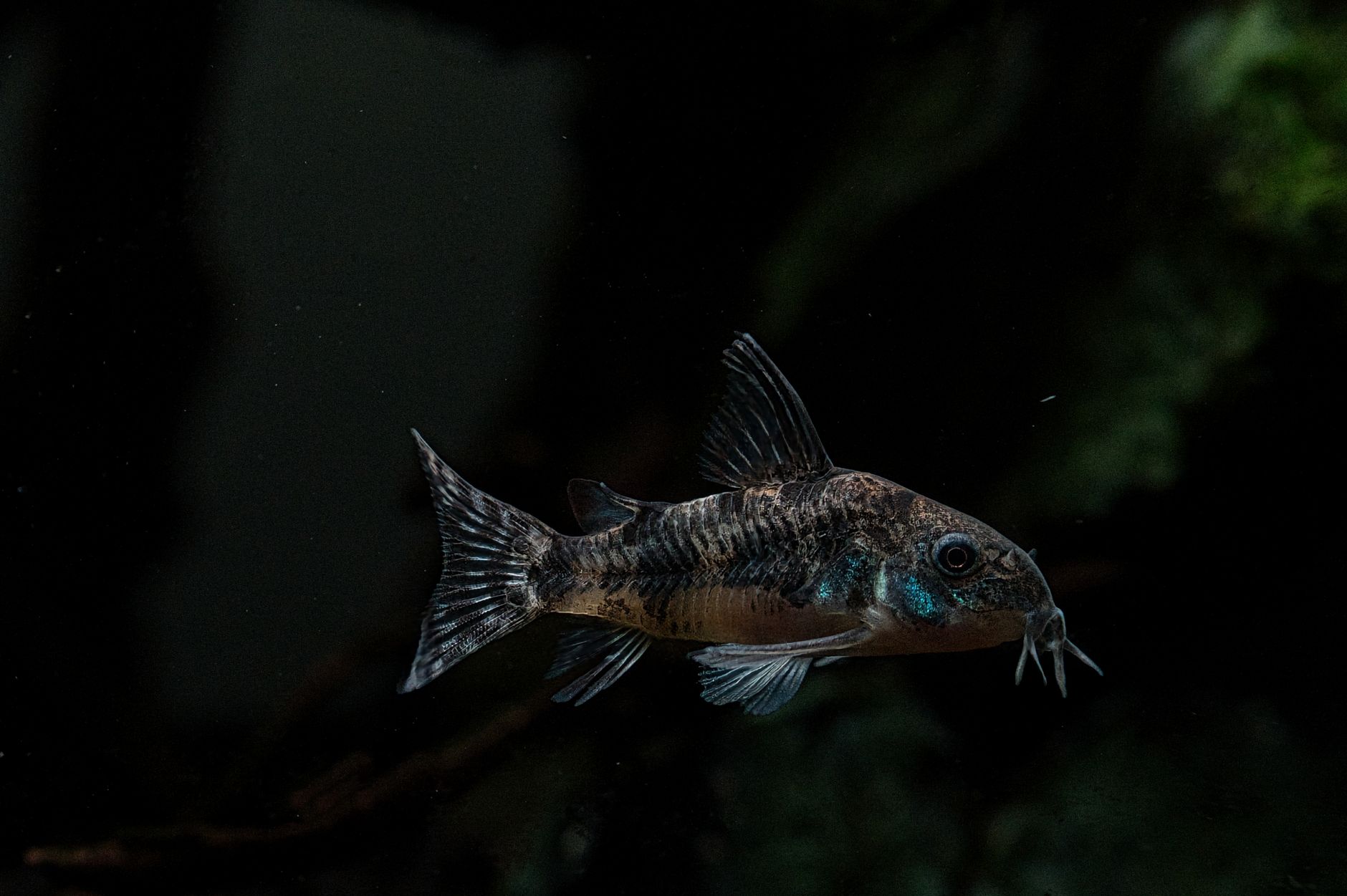
The catfish weren’t in the bag for more than twenty minutes, one of those clear plastic sacks from the shop sealed with a rubber band, and by the time they hit the quarantine tank they were already clamped up against the sponge filter. That was day one. By day six, the sand hadn’t a single track through it, and the sinking pellets that went in at lights-out were still whole come morning.
It’s a specific kind of worry that sets in around day four. The fish aren’t dead, but they aren’t doing much either. They sit on the bottom, fins tight against the body, and every few hours they shift a half-inch to the left. The water tests fine — ammonia zero, nitrite zero, pH within range of the shop water — but the food stays uneaten. Something is wrong, and the usual explanations don’t cover it.
The conductivity gap nobody tests for
Most aquarists check ammonia and nitrite first, and that’s sensible. But the new corydoras that won’t eat after nearly a week are rarely suffering from a water quality problem in the usual sense. The tests come back clean, the tank has been cycled for months, and the sponge filter was running in an established system before being moved to the quarantine setup. The problem isn’t toxicity.
The problem is often a mismatch in something less obvious. TDS, for instance — total dissolved solids. A fish that’s been living in hard, mineral-rich water at the shop, with a TDS reading of maybe 350, doesn’t always adjust gracefully to a tank reading 120. The fish doesn’t die, but something in its osmoregulatory system feels off, and appetite is one of the first things to go.
Yusuf, who keeps around forty species of South American catfish in a home setup outside Klang, ran into this exact problem with a batch of Corydoras aeneus last year. “I did everything right,” he says. “Drip acclimated for an hour, matched the temperature, even used the same brand of dechlorinator. They just sat there for eight days. I finally tested the conductivity and it was half of what the shop had.” A slow top-off with water mixed to match the shop’s parameters brought them around within two days.
A handful of almond leaves in Penang
Another possibility that gets overlooked: the substrate. Corydoras are tactile feeders. They sift through sand with their barbels, sorting edible matter from grit, and if the substrate isn’t right, they simply won’t bother. A quarantine tank set up with bare glass or large-grained gravel can confuse them to the point of refusing food entirely.
The fish don’t understand that the bare-bottom tank is temporary, meant for observation and easy cleaning. They see an environment where their primary feeding method doesn’t work, and they shut down. A thin layer of pool filter sand — rinsed thoroughly, no more than half an inch deep — can make the difference between a fish that hides and a fish that starts working the bottom for food within hours.
A keeper in Penang once reported that his new corydoras wouldn’t touch anything until he added a handful of almond leaves to the tank. The leaves weren’t there for tannins or pH adjustment — they were there to provide a surface for biofilm and microfauna to grow on. Within a day, the catfish were picking at the leaves, and within two days they were taking pellets. The food itself hadn’t changed. The opportunity to forage in a familiar way had.
Crushed tubifex on a sinking pellet
When a corydoras hasn’t eaten in nearly a week, the impulse is to try everything — flakes, pellets, frozen bloodworms, blanched zucchini, Repashy gel, live brine shrimp. The fish ignores it all. The keeper starts to wonder if the fish are sick, if the shop sold them a bad batch, if this is just how it goes sometimes.
But the issue might be simpler than illness. Many corydoras sold in shops are wild-caught, or at least tank-raised on a diet that looks nothing like commercial fish food. They’ve been eating live or frozen foods exclusively — blackworms, daphnia, mosquito larvae — and they don’t recognize a sinking pellet as food. It’s not that they’re stressed. It’s that they’ve never seen one before.
A good trick: crush a small pinch of freeze-dried tubifex or Daphnia into a fine powder and sprinkle it over a sinking pellet. The scent and movement of the powder on the water surface can trigger a feeding response. Once the fish takes that first bite, they often generalize quickly to the pellet itself. The key is getting that first bite, which may not happen if the food looks like nothing they’ve ever encountered.
Waiting for the room lights to go out
Corydoras are crepuscular, most active at dawn and dusk. A quarantine tank placed under bright room lights or a full-spectrum LED on a twelve-hour timer can throw off their internal clock. They don’t feel safe enough to feed, not because they’re sick, but because they’re waiting for the right light conditions that never come.
One keeper in Johor solved a week-long fasting period by simply turning off the tank light entirely for three days and feeding only during the half-hour after the room lights went out. The fish started eating on the second evening. “I felt stupid,” he says. “I’d been watching them during the day, wondering why they weren’t eating, and they were just waiting for it to get dark enough to move.”
Dimmers, floating plants, or a strip of tape over part of the tank can create a shaded zone where the fish feel comfortable emerging. The goal isn’t total darkness all day — it’s a gradient that lets them choose their comfort level.
Eating at three in the morning
There’s also the possibility that the fish are eating, but not in a way the keeper can see. Corydoras in a new environment sometimes feed only at three in the morning, only in the corner behind the sponge filter, only when no one is in the room. A keeper checks the tank at ten at night and again at seven in the morning, assumes nothing was eaten, but the fish may have taken food during a window neither observation caught.
Yusuf mentions a batch of Corydoras sterbai that appeared to fast for five days. He was about to treat them for internal parasites when he noticed that the pellet he dropped in the back corner was gone by morning, even though the front of the tank still had uneaten food. The fish were eating — they were just eating in the spot where they felt safest, and only hours after he went to sleep.
The fix, if it can be called that, is to spread food across multiple locations in the tank, including areas with cover. A small terracotta pot, a clump of Java moss, or a shadowed spot near the filter outflow can become the designated safe feeding zone. Once the fish establish that pattern, they eventually expand their territory.
Yusuf’s rule of thumb
Not every case resolves with a substrate change or a light adjustment. A fish that refuses food for more than ten days, especially one that begins to show a sunken belly or clamped fins that don’t relax, needs a different approach. By that point, the fish may be running on its last reserves, and supportive care — a broad-spectrum dewormer, a medicated food soak, or even a salt bath and an observation tank with lower flow — may be warranted.
But the line between stress and illness is not always clear. Yusuf’s rule of thumb: “If the fish looks thin at day seven, I start intervening. If it looks the same as day one, I give it three more days and change one variable at a time.” Changing too many things at once — new food, new light schedule, new water parameters — makes it impossible to know what worked. One variable, three days of observation, then another variable if needed.
For anyone staring at a quarantine tank full of sitting catfish on day six, the advice is simple: don’t reach for medication yet. Rule out the easy things first — conductivity, substrate, light cycle, feeding time, food form. Most of the time, the fish are fine. They just need a different invitation.
📷 Photos: Vlada Karpovich (Pexels), Michal Petráš (Pexels)