Finding a Wild-Type Betta Smaragdina From a Local Importer Who Doesn’t List Stock Online
Finding a Wild-Type Betta Smaragdina From a Local Importer Who Doesn’t List Stock Online
Most fish imported into the country pass through a small number of wholesale distributors, and most of those distributors do not maintain public inventory lists. A hobbyist looking for a specific wild-type betta—something like Betta smaragdina, the emerald green fighting fish from northeastern Thailand and Laos—quickly discovers that the usual routes don’t apply. The fish isn’t bred in quantity by local hobbyists. It arrives irregularly, often mixed in with shipments of other wild bettas, and it sells within days, sometimes hours, of a box clearing customs.
The conventional approach—find an online listing, click buy, wait for delivery—fails here. The fish exists, but finding it requires treating the search as a logistics problem rather than a shopping errand.
The Shopkeeper in the Suburb of Used-Car Lots
The first mistake most people make is assuming any fish shop can order one. They can’t. Most local pet stores source from domestic breeders or the same few large wholesalers that carry farmed stock—plakats, halfmoons, crowntails—not wild-caught species. B. smaragdina comes through a different channel entirely.
One experienced hobbyist spent three weeks calling every fish shop within a two-hour drive before a shopkeeper in a suburb known mostly for used-car lots told him the real answer: there are exactly two or three importers in the region that bring in wild-caught bettas from Southeast Asia, and none of them have a counter you can walk up to. They operate out of warehouses, industrial units, or repurposed garages. They don’t advertise. They don’t answer emails about stock levels. They sell to other wholesalers and to a short list of breeders who have established a relationship over time.
That hobbyist eventually found a contact through a forum post from 2019. The post mentioned an importer named Priya who ran a small operation out of a storage unit near the airport. The phone number was still active. Priya picked up on the third ring.
“I don’t keep a list,” she said. “If I told everyone what I had, I’d have fifty people showing up for one fish. You come when I tell you the shipment’s in, and you see what’s in the bag.”
That’s the system. No inventory. No holds. No photos sent ahead.
Twenty-Eight Degrees and Methylene Blue
Priya’s operation turned out to be a single metal shelving unit with about forty plastic tubs, each holding five to ten bags of wild bettas. The room was warm—she kept it at 28°C—and smelled of algae and methylene blue. She didn’t take walk-ins. The only way to know about a shipment was to be on her text list, and the only way onto that list was to visit in person, buy something, and prove you weren’t going to waste her time.
The hobbyist’s first visit was a reconnaissance trip. He bought a pair of Betta mahachaiensis—not what he was after, but the only wild bettas Priya had that week. The fish were healthy, well-acclimated, and priced reasonably at $28 per pair. “If you’re only here for the hot fish, I won’t bother calling you,” Priya told him. “I need people who understand these fish aren’t pets. They’re research.”
Most of her buyers were breeders working on specific lines, or academics maintaining wild-type populations for study. A hobbyist looking for one fish for a display tank was a lower priority. It took two more visits over the following months—one for a group of Betta imbellis, another for a single male Betta splendens wild-type—before Priya added the hobbyist to the text list. The list itself was stripped-down: a date, a time, a range of species expected. No exact counts.
“Thursday AM. B. smaragdina Possible.”
The text arrived on a Tuesday afternoon. “Thursday AM. B. smaragdina possible. B. mahachaiensis confirmed. You want in.”
The hobbyist had a job that didn’t permit spontaneous Thursday absences. That was the first real cost—missing a workday for a possibility, not a guarantee. He took the day anyway, partly because Priya had said “possible” rather than “confirmed,” and “possible” meant she’d seen them in the box from the exporter but couldn’t guarantee survival through the final leg of the journey.
He arrived at 9 A.M. Priya was already unpacking. The shipment had come in late the night before—twenty-three bags from a collector in Nakhon Phanom province, near the Mekong River. The bags were packed in styrofoam boxes with heat packs that were still warm. Priya had already culled four dead fish. Three more looked questionable, pale and listing sideways in their bags.
“This is the worst part,” she said, lifting a bag that held a single dark shape at the bottom. “You don’t know what you’ve got until they’ve been in clean water for six hours.”
The importers who handle wild bettas expect losses. A bad shipment can see nearly a fifth of the fish dead on arrival. Priya priced her fish to account for that—the survivors cost more than farmed stock, not because the fish were rare, but because the ones that didn’t make it were priced into the ones that did.
Holding a Bag Up Against a White Plastic Bin
Priya didn’t open bags. She let them float in the heated holding tubs for an hour before she made any decisions. The hobbyist watched. The fish that survived the journey were already showing color by the time the bag water had warmed. The ones that wouldn’t make it stayed pale or developed a whitish film on the body—columnaris, probably, triggered by the stress of shipping.
Four bags were labeled B. smaragdina. Priya pulled them out and held each one up against a white plastic bin. The hobbyist had to look through condensation and algae growth on the inside of the bags. What he saw:
- Two bags held males. Both were small—maybe 4cm body length—with the iridescent green scaling visible on the flanks, but the fins were clamped, which could be shipping stress or an early sign of disease.
- One bag held a female. She was larger, duller, with the horizontal stripe typical of the species. She was active, swimming against the bag surface.
- The fourth bag held what Priya thought was a male, but on closer inspection was a female with unusually strong green color—sometimes called a “false male” in the trade.
The hobbyist had come prepared with a checklist he’d compiled from a breeder’s blog post written in 2017. It included gill movement, fecal matter in the bag, body posture, and eye clarity. He passed on one of the males. The gill movement was too fast. Priya didn’t argue. “You’ll see ones that are ready,” she said. “The ones that aren’t, you just leave.”
The Price of Entry
The male he chose was $45. The female was $35. The catch: Priya only took cash. No receipts. No returns. “They’re wild animals,” she said. “They don’t come with a warranty.”
The hobbyist had driven 90 minutes each way, taken a full day off work, and spent $80 on fish. He also bought a bag of almond leaves—$10—and a small bottle of methylene blue that Priya pressed into his hand without charging. “Acclimate them slow. Two hours. Drip method. Don’t just float and dump.”
The real cost wasn’t the fish. It was the time spent building the relationship—four visits over five months, about $300 in fish he didn’t originally want, and a willingness to show up on short notice for a maybe. That’s the price of entry for a fish that doesn’t appear on any public list.
Six Parameters and a Drip Line
The hobbyist had prepared a 10-gallon tank two weeks earlier, cycled with media from an established filter. He’d learned from a previous mistake: rushing a setup for a wild-caught fish is a fast way to lose it. Wild bettas are less tolerant of ammonia and nitrite than their domesticated cousins. They also need softer, more acidic water than most tap water provides.
His water parameters before adding the fish:
- pH: 6.4 (achieved with peat filtration and almond leaves)
- Temperature: 26.5°C
- TDS: 45 ppm
- Ammonia: 0
- Nitrite: 0
- Nitrate: 5 ppm
The male B. smaragdina was acclimated over two hours using a drip line from the tank—about one drop per second into a 2-gallon bucket with the bag floating inside. The fish was transferred via a plastic cup, not netted. Priya had warned against nets: “Their scales are looser than domesticated fish. You can damage them without meaning to.”
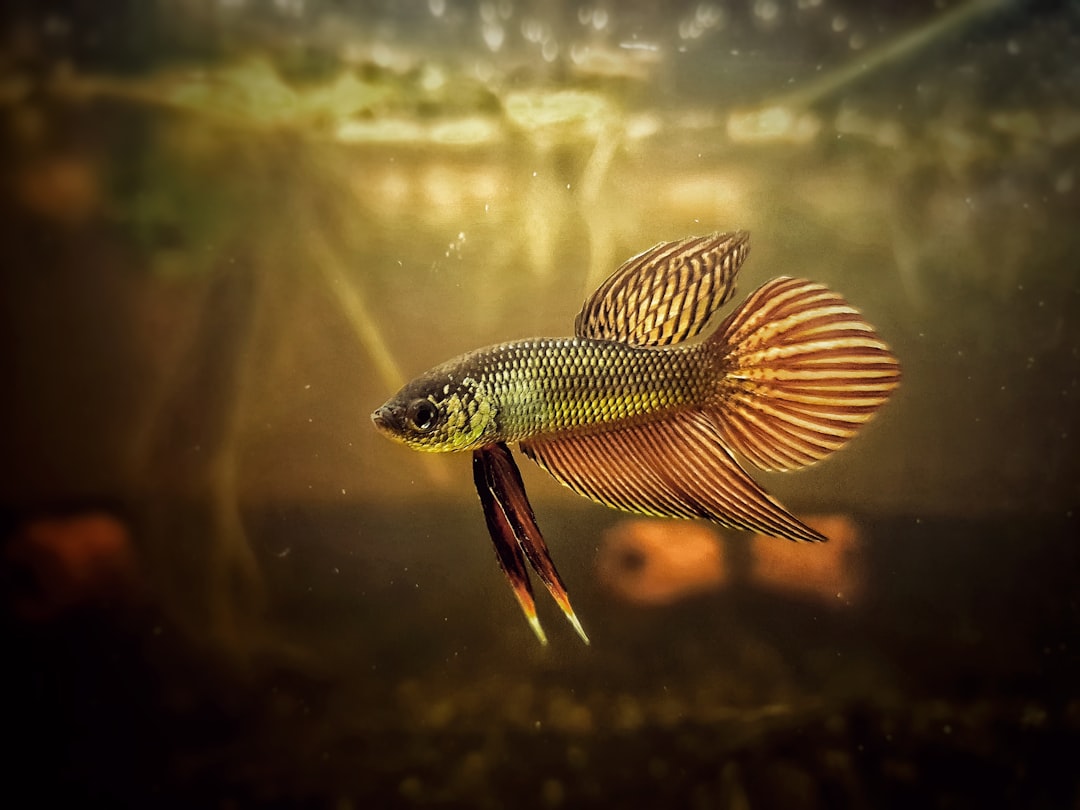
The male emerged from the cup and sat on the bottom for about 20 minutes. That’s normal. The hobbyist left the room. When he returned, the fish was hovering near the surface at the back corner, gill movement slow and regular, color already deepening from the dull brown-green of the bag to a more vivid emerald along the flanks. The iridescence caught the tank light in a way that looked almost metallic.
The String of Half-Digested Worm Casing
The fish didn’t eat for two days. That was fine—normal for a newly imported wild betta adjusting to a new environment. On the third day, he offered a single live blackworm. The fish took it immediately. Encouraged, he offered four more. The fish ate those too. The next morning, the tank had a visible string of half-digested worm casing on the substrate, and the fish was sitting on the bottom again, breathing faster than before.
This was a specific mistake he’d made before: assuming that because a wild-caught fish eats eagerly, it should be fed to appetite. In reality, the digestive system of a recently shipped betta is compromised. The gut flora is out of balance. Overfeeding causes bloating, which can lead to constipation, which can lead to loss of appetite and a downward spiral that’s hard to reverse.
He fasted the fish for two days. The symptoms resolved.
Bubble Nests and Patrol Routes
After a week, the male B. smaragdina began behaving like a wild betta rather than a stressed refugee. He built a bubble nest—not in the way domestics do, a massive mat of bubbles, but a sparse scattering under a floating almond leaf. He patrolled the tank in a deliberate pattern: front left corner, across the front glass, pause at the filter outflow, back along the rear wall, repeat. He never flared at his reflection, which surprised the hobbyist. Wild bettas apparently don’t flare as readily as domesticated ones.
The female, housed in a separate 5-gallon tank after an attempted introduction that lasted exactly four minutes—she was not receptive—developed her own routine. She was more exploratory than the male, often wedging herself into narrow gaps between the driftwood and the glass. She also ate more aggressively, striking at frozen bloodworms with an intensity that the male didn’t match.
The Embrace That Produced Nothing
After three weeks, the hobbyist attempted a spawn. He introduced the female in a clear cup inside the male’s tank—standard method. The male displayed. The female displayed back. After 24 hours, he released her. They circled each other. The male wrapped the female—the actual spawning embrace—and the hobbyist watched, certain he’d done everything right.
Nothing happened. No eggs. The female retreated to a corner and the male resumed his patrol pattern. The next morning, the female had a few small white spots on her caudal fin—minor fin damage from the male’s aggression. She was removed within an hour. The spots healed. No spawn.
Priya, informed via text, replied: “They’re not ready. You rushed the conditioning. Feed live food exclusively for two weeks. Raise the temperature to 28.5. Then try again.”
He had been feeding a mix of frozen bloodworms, frozen brine shrimp, and occasional live blackworms. Priya’s instruction—live food only—seemed extreme, but she’d been importing wild bettas for a decade. He switched to live daphnia, live blackworms, and the occasional wingless fruit fly. The male bulked up visibly. The female developed a more rounded belly.
The second attempt, three weeks later, produced eggs. About thirty of them. The male collected them into the bubble nest. By the next morning, most had fallen. A dozen wrigglers were visible on the third day. By day seven, the hobbyist had six fry—a small success, but not the robust spawn he’d hoped for.
Aquarium Water in the Car Carpet at 11 P.M.
If the hobbyist had to do it again, knowing what he knows, the process would be different. He would start by finding the importers earlier—not by calling shops, but by searching forums for mentions of specific importers by name, then checking social media accounts that post about wild betta shipments. Some importers maintain a low-key Instagram presence where they sometimes post photos of recent arrivals without identifying species. You have to recognize the fish from the photo.
He would also budget more time. The relationship-building phase isn’t optional. It’s the main event. Buying fish you don’t want to build credibility is a real expense, but it’s cheaper than the alternative—driving to an importer empty-handed and being told there’s nothing available, then wondering if you’ve used up your one chance.
And he would bring a cooler, a battery-powered air pump, and a container large enough to hold the fish for the drive home. A plastic grocery bag isn’t enough for an hour-and-a-half drive. He learned that when the female’s bag developed a slow leak on the passenger seat floor mat.
That’s the kind of detail that no forum post mentions. You find out because you’re scrubbing aquarium water out of the car carpet at 11 P.M. on a Thursday, wondering why you didn’t bring a spare container.
📷 Photos: Navin Rai (Unsplash), Navin Rai (Unsplash), Navin Rai (Unsplash)