Seven months and $900 later, the neon tetras arrived in a different country
Seven months and $900 later, the neon tetras arrived in a different country
The first mistake happened before the fish did. A fish keeper in San Diego — let’s call him Mark, because that’s what his friends call him — had spent months working through the Peruvian export process for neon tetras. He’d read the forum threads, called the USDA office twice, and thought he understood what “CITES export permit” meant for a non-CITES-listed species. The neon tetra is not on any CITES appendix. That fact, technically correct, turned out to be almost useless.
Peru’s wildlife authority, SERFOR, requires an export permit for any native freshwater species leaving the country, regardless of CITES status. This is not a secret. It’s printed on their website in Spanish and English. But the enforcement of it, and the specific documents required to get that permit, are a different thing entirely from the law itself. Mark learned this in early February, when his first shipment — nine boxes of tetras, packed at a facility near Iquitos — was held at Lima’s Jorge Chávez International Airport for eleven days.
Eleven days in a refrigerated room
Mark had arranged the export through a broker in Iquitos who had handled ornamental fish for seven years. The broker had sent copies of what looked like the right forms: a health certificate from SENASA, the agricultural health authority, and a commercial invoice. What he hadn’t sent was the SERFOR export resolution — a specific numbered document that takes five to ten working days to issue and requires a separate application filed by a registered exporter in Peru. The broker was not registered with SERFOR. He had been operating under another company’s registration number, which had expired in November of the previous year.
“We found this out because the airline’s cargo office called and said the boxes were sitting in a refrigerated room and nobody would release them,” Mark said. “The fish had been packed for thirty-six hours at that point.” The call came on a Tuesday afternoon. By Wednesday, the broker had located a registered exporter in Lima who could file the application, but the exporter needed notarized copies of the supplier’s commercial registration, the original health certificate, and a letter from the buyer in the U.S. confirming the purpose of the import. Mark’s letter was not notarized. He had not known it needed to be.
The tetras stayed in the airport for seven more days. On day nine, Mark received a photograph from the broker: two of the nine bags had turned cloudy. On day eleven, the SERFOR resolution was issued, but by then the shipment was considered nonviable. The airline charged a storage fee of 320 soles — about $85 — and the fish were euthanized at the airport by a SENASA veterinarian. The cost of the fish themselves was roughly $1,200. The freight was $780. Mark did not get a refund from the broker.
The actual permit that was needed
The permit Mark eventually obtained, for a second attempt, was not a CITES document. It was something called a Resolución Directoral from SERFOR’s Directorate of Sustainable Management of Forest and Wildlife Resources. It cost 246 soles — about $65 — plus a fee for the registered exporter’s service, which ran another $150. The document was valid for one shipment only, for a period of 30 days from issuance, and had to specify the exact number of fish, the species by scientific name (Paracheirodon innesi), and the name and address of the importer in the United States.
To get it, Mark had to provide: a copy of his U.S. Fish and Wildlife Service import license (which he already had, for $100 annually), a letter explaining the purpose of the import (scientific research, he wrote, which was not entirely true but was the category that moved fastest), proof of the supplier’s legal origin of the fish (a document Mark had never asked for during the first attempt), and a copy of the broker’s current SERFOR registration. The registration requirement was the sticking point. Most brokers in Iquitos are not individually registered; they work under larger companies. Mark’s new broker was a company called Amazonas Acuáticos S.A.C., which had a registration number that could be verified on SERFOR’s website. Mark checked it himself, three times, at an internet cafe in Miraflores during a trip he made to Lima in March.
The trip was not planned. He had flown down after the first shipment failed, realizing that no amount of email was going to resolve the situation. The flight from Los Angeles to Lima cost $620 round-trip. He stayed at a hostel in Miraflores called Pariwana, which charged $18 a night for a dorm bed. The internet cafe charged 1 sol per hour — about 27 cents — and smelled of burnt coffee and insect repellent. A woman at the desk, who spoke no English, helped him navigate SERFOR’s online portal, which required a RUC number (Peru’s tax ID) that Mark did not have. She used her own. He paid her 20 soles for the help.
Ninety-three percent survival, two weeks of electric blue
The second shipment was organized in April. Mark had a different broker — the registered exporter in Lima, not the Iquitos middleman — and a different airline. He used LATAM instead of Avianca, based on a recommendation from a fish importer in Florida who had posted in a private Facebook group about his own Peru experiences. The tetras were flown from Iquitos to Lima on a domestic flight, then transferred to the international cargo hold. The total transit time from packing to arrival in Los Angeles was 28 hours.
Ninety-three percent survival rate. Mark counted them. Out of 2,500 tetras, 173 were dead on arrival. The surviving fish looked thin but active, and after a week in quarantine at a facility near LAX, they began feeding on crushed flake and frozen cyclops. Mark sold most of them to a wholesaler in Florida at $1.10 each — below market price because they were stressed and the wholesaler was taking a risk. He kept about 200 for himself, which went into planted tanks in his garage.
What the costs actually added up to
The total for the second attempt, including the failed first shipment, was about $4,800. That broke down roughly as: $2,400 in fish and freight across both attempts, $620 for the Lima trip, $350 in permits and notary fees, $180 in phone and internet costs, $85 in airport storage fees for the first failed shipment, and about $165 in miscellaneous items — a taxi from the Lima airport to Miraflores that cost 60 soles, a meal at a cevicheria near the SERFOR office that cost 28 soles and came with a bottle of Inca Kola that was warm, a USB stick to transfer documents at a print shop because the print shop’s computer could not open PDFs from Mark’s email.
The net loss, after selling the surviving fish from the second shipment, was roughly $3,100. Mark had expected to break even or make a small profit. He did not.
The fish that swam past a plastic castle
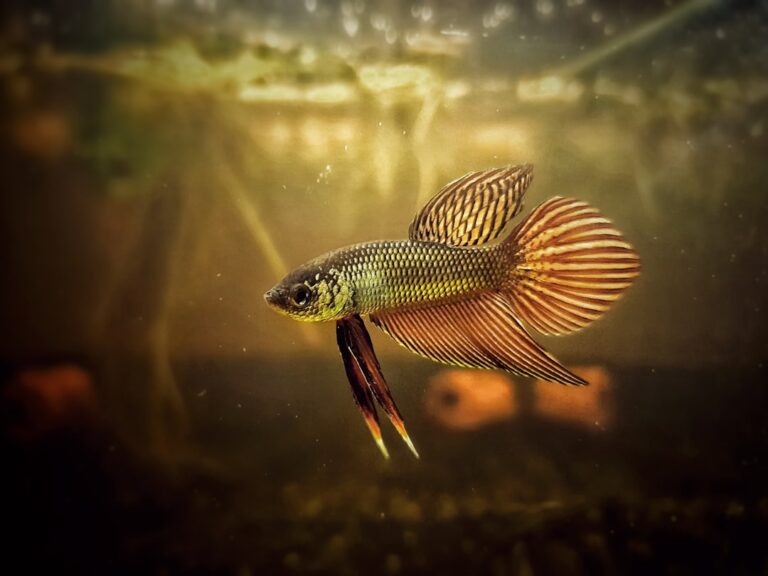
The fish that survived had a noticeably different body shape from the neon tetras available in U.S. pet stores. They were leaner, with a more pronounced curve to the lateral line, and their iridescent blue stripe was brighter — almost electric — for the first two weeks before fading to a more typical tone. Mark thinks this was a combination of wild diet and the stress of transport causing chromatophore expansion. He is not entirely sure. He asked a biologist at the University of California who studies characins, who said it could be a regional phenotype from the Ucayali River system, which is where these particular fish were collected. But the biologist also said it would take genetic analysis to confirm, and that analysis costs money Mark did not have.
One other thing: the fish from the second shipment carried a higher than normal rate of Pleistophora — the microsporidian parasite that causes neon tetra disease. About 14 percent of the fish he kept developed symptoms within six weeks. Mark does not know whether this is typical for wild-caught Peruvian neons or whether it was specific to this collection site. The Iquitos broker had said the fish were from “the river near the city,” which could mean anything. The registered exporter in Lima did not know the collection location and did not ask. Mark did not ask either. It had not occurred to him to ask.
The import license itself was the easy part
The U.S. Fish and Wildlife Service import license — the one Mark already had — took three weeks to arrive and cost $100. It is a straightforward application. The USDA APHIS import permit for live fish, if one is required, is also straightforward. Neither was the bottleneck. The bottleneck was the Peruvian export side, which required a combination of documents that no single government website lists in one place. SERFOR’s website has a page titled “Exportación de Especímenes de Fauna Silvestre” that lists general requirements, but the specific forms change depending on whether the exporter is a company or an individual, whether the species is CITES-listed or not, whether the destination is the U.S. or the EU, and whether the shipment size exceeds 1,000 individuals.
Mark’s second shipment was 2,500 fish. He later learned that shipments under 1,000 individuals can sometimes use an abbreviated process called Declaración Jurada, a sworn declaration that does not require the full Resolución Directoral. He did not know this at the time. The registered exporter in Lima did not mention it, possibly because the exporter’s fee is higher for the full resolution process, or possibly because the exporter genuinely believed the full process was required. Mark does not know which.
This is the part that still frustrates Mark, six months afterward. The tetras from the second shipment, after he sold them to the Florida wholesaler, were shipped to a distributor in Texas and then to retail stores across the Southeast. Mark has no way of knowing where they ended up. He thinks about this more than he expected to — the idea that two shipments, several thousand dollars, seven months of phone calls and emails and a trip to Lima, and the fish are now in somebody’s 10-gallon tank in Atlanta, swimming past a plastic castle, and nobody buying them knows what it took to get them there. The wholesaler certainly does not advertise it. The retail stores do not mention it on the bag.
Would Mark do it again? He says probably yes, but only for a specific project — a breeding trial he wants to run with a friend who keeps wild-type characins. The trial would require about 500 fish, which is under the 1,000-individual threshold, and he would use the Declaración Jurada process. He has saved the email address of the woman at the internet cafe in Miraflores, in case he needs help with the SERFOR portal again. He has not emailed her yet. He is not sure she would remember him.
📷 Photos: A. L. Brown (Unsplash)