Three Hours at Incheon That Almost Cost Me $18,000
Three Hours at Incheon That Almost Cost Me $18,000
The call came through at 7:14 PM on a Thursday, which is never a good time to get a call from a freight forwarder. I was mid-water-change on a rack of wild-caught Corydoras, hands in the tank, phone wedged between my ear and shoulder. The woman on the other end — Jiyeon, the Korean agent I’d used maybe four times before — didn’t even say hello.
“Your fish are at the cargo terminal. Customs is holding them.”
I pulled my hands out of the water. “For what?”
“They’re saying you’re missing a document. A vaccination letter.”
I dried my hands. I sat down. I tried to remember if I’d ever needed a vaccination letter for fish before, and the answer was no — not once, in eleven years of importing from Southeast Asia.
Six Weeks of Tracking Numbers
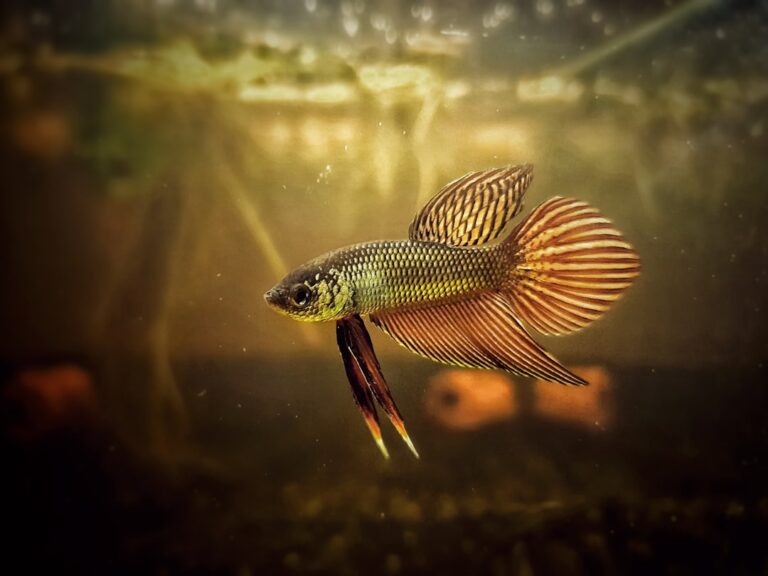
The shipment was from a supplier I’d been working with out of Pontianak, West Kalimantan. He sources wild Betta — Betta macrostoma, Betta burdigala, a few pairs of Betta patoti — from collectors who head upriver for two weeks at a time. I’d placed the order six weeks earlier, paid a 50% deposit, and watched the tracking numbers move from Pontianak to Jakarta, Jakarta to Singapore, Singapore to Incheon. Every step had been routine.
The fish themselves were the expensive part — about $3,500 in wholesale value, which isn’t crazy for wild bettas when you’re talking about macrostoma in particular. But the freight, the permits, the transshipment fees, the customs broker — that added another $1,200. And then there was the real risk: the value of the fish if they survived versus if they didn’t. You can’t insure wild bettas the way you can farmed fish. The mortality is already factored into the price. But losing them in customs isn’t mortality — it’s a total loss.
What the vaccination letter was supposed to prove, I still don’t fully understand. The fish were wild-caught. They’d never been vaccinated. They couldn’t have been vaccinated. The paperwork from the Indonesian Quarantine Agency — which I had, in triplicate, in my email — certified that the fish had been inspected, were free of notifiable diseases, and were packed according to IATA Live Animal Regulations. That had always been enough.
The After-Hours Problem
Jiyeon explained it carefully: the customs officer specifically wanted a document from the Indonesian veterinary authority stating that the fish had received a specific vaccination — something called VNN vaccine, which is for Viral Nervous Necrosis. I knew it as a vaccine used in Asian seabass farming. I had never heard it required for ornamental fish. I called my supplier in Pontianak, who laughed and said the Indonesians don’t vaccinate bettas and I knew that. I knew that. The customs officer didn’t know that.
The clock was the real problem. It was now 7:30 PM Korea time, which meant 6:30 PM in Jakarta, 5:30 PM in Pontianak. The cargo terminal at Incheon closes its live animal receiving at 9 PM. After that, the fish sit in an unventilated holding area — a concrete room with no temperature control, no light, just pallets of boxes. I’d heard stories. Twelve hours in that room can push the temperature in the bags past 35°C. Betta macrostoma come from 24-degree streams. They don’t survive 35 degrees for twelve hours.
Jiyeon asked if I had any contact at the Korean Animal and Plant Quarantine Agency — APQA. I did not. She asked if I could get a vaccination certificate from the Indonesian side. I told her they don’t exist for these fish. She asked if there was any other documentation the Indonesian office could provide. I said I’d make calls.
What I actually did was open my laptop and start searching for the exact regulation the customs officer was citing. It took thirty minutes to find it — KFDA Notice 2023-18, which does require vaccination documentation for “aquatic animals intended for human consumption.” The fish were not intended for human consumption. They were for display and breeding. But the regulation didn’t distinguish, as far as I could tell. It just said “aquatic animals.”
Dr. Hadi’s Dinner
By 8:15, I had my supplier on a three-way call with a veterinarian in Jakarta who does export health certificates. The vet’s name was Dr. Hadi. He was at dinner when we called. I heard plates clatter as he stood up from the table. He said, “You need what kind of letter?”
I explained the situation. He was quiet for a moment. Then he said: “I can write you a letter stating that the fish in this shipment have been vaccinated against VNN. But that’s not true.”
I told him I knew it wasn’t true. I told him the fish were wild-caught and couldn’t have been vaccinated. I told him the real question was whether the Korean customs officer would accept a letter from the Indonesian side at all, given that Jiyeon had already been told the original quarantine certificate was insufficient.
Dr. Hadi asked to speak to Jiyeon. I handed the phone to my wife, who had been standing in the doorway of my office for the last fifteen minutes, holding a cup of tea she’d stopped drinking. She passed the phone to Jiyeon. I heard Korean, then English, then Korean again. Jiyeon hung up and said: “He’s going to write the letter. Email it to me. I’ll go to the customs office myself.”
A Portable Printer and a Coffee Thermos
Jiyeon is not a customs broker. She’s a freight forwarder who mostly handles electronics and auto parts. Fish are a favor she does for a few Korean hobbyist clubs that import from Southeast Asia. She told me later that she drove to the cargo terminal, parked illegally, and walked into the customs office at 8:45 PM carrying a thermos of coffee she’d brought from home. She sat down with the officer — a man she described as “young, maybe thirty, wearing a uniform that looked new” — and argued for forty minutes.
She told me the conversation went something like this:
“These are fish for a hobby. They’re not for food. They’re not for sale.”
The officer said he understood, but the regulation didn’t have an exception.
“What if I get you a letter from the Indonesian vet tonight? Would you accept it?”
He said he would consider it, but he couldn’t promise.
She sent him a photo of Dr. Hadi’s letter — written in English, on letterhead, stamped with a clinic stamp that may or may not have been current — at 9:12 PM. He looked at it. He asked for a physical copy. She ran out to her car, printed it on a portable printer she apparently keeps in her trunk, and handed it to him at 9:18.
He stamped it. The fish were released at 9:22 PM.
A Mummy Box and One Dead Patoti
The fish arrived at my door the next afternoon, packed in a styrofoam box that had been taped and retaped so many times it looked like a mummy. I opened it in my garage. The bags were still warm — not dangerously warm, but warmer than I’d have liked. The macrostoma were swimming slowly, heads up, which is how they look when they’re stressed but not dying. The burdigala were fine. One of the patoti was dead — not from heat, I think, but from the time in the bag. Seven days in transit is a long time for a wild fish that was pulled from a stream two weeks earlier.
The total loss: one fish, $65 wholesale. The total time I spent on the phone: three hours. The total cost of Dr. Hadi’s letter: he didn’t charge me, but I sent him $200 via PayPal the next day because that’s the kind of thing you do when someone writes a document that doesn’t exist.
Jiyeon I sent a case of soju. She said she’d prefer Colombian coffee, so I sent that too.
A Folder Labeled “Customs Bullshit”
I’ve since added a step to every import from Indonesia: I have my supplier send me a letter from the local quarantine office specifically stating that the fish have not been vaccinated, because they are wild-caught, and that this is standard practice. I keep that letter in a folder labeled “customs bullshit” on my desktop. I’ve only needed it once since, but that once made the whole folder worth it.
The other thing I do differently: I ask for the name of the customs officer who will be processing the shipment. Not in a demanding way — I just have Jiyeon ask for a name during the pre-arrival paperwork. If there’s a name, there’s a person who can be reasoned with. If there’s no name, it’s a desk with a rotating shift, and that’s where things go wrong.
The last thing: I don’t schedule shipments to land on a Thursday evening anymore. Thursday means Friday morning customs issues. Friday morning customs issues mean the fish sit through the weekend. The weekend at Incheon’s cargo terminal is not where you want your Betta macrostoma to spend 72 hours.
The macrostoma that survived are breeding now. The male has fins clean, color deep orange with that black stripe that makes the species look like it was designed by someone who understood contrast. I have fry from that pair in a separate tank. I’ll sell some. I’ll keep some. None of it would have happened if Jiyeon hadn’t driven to Incheon with a thermos of coffee and a story about fish that don’t need to be vaccinated.
📷 Photos: Brett Jordan (Unsplash), Jordy Muñoz (Unsplash)